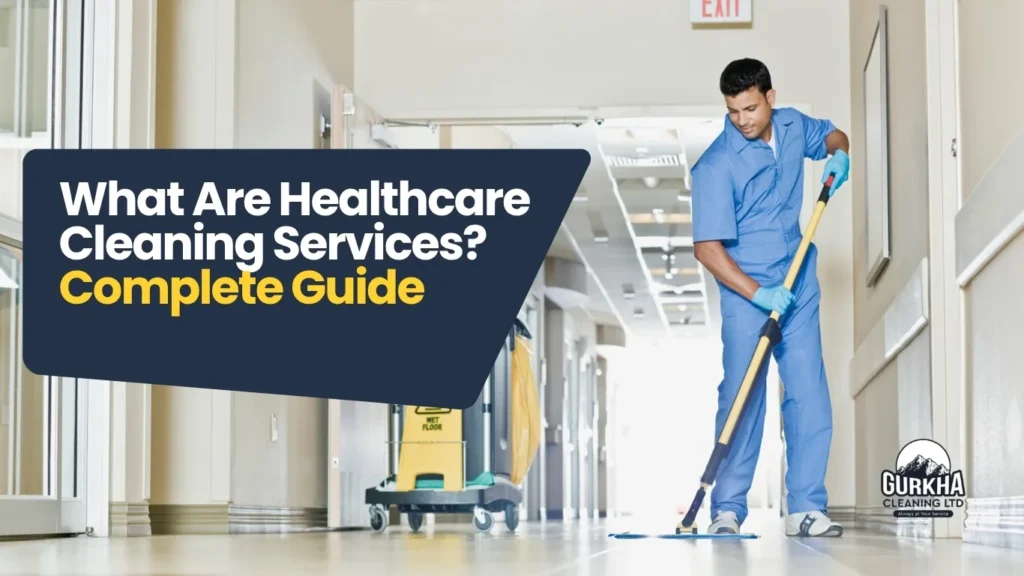
Patients notice a spotless waiting room. CQC inspectors notice a lot more than that. In medical and care environments, cleaning isn’t an aesthetic preference; it is a primary defence against healthcare-associated infections (HAIs) and a core compliance requirement. Unlike standard commercial cleaning, healthcare facility cleaning demands strict adherence to infection-control protocols, functional risk (FR) categorisation, and verifiable audit trails.
Whether you manage a busy GP surgery, a dental practice, or a residential care home, this complete healthcare cleaning services guide breaks down everything you need to know: what’s included, applicable UK standards (including the NHS 2025 guidelines), risk-based schedules, and how to choose a qualified provider across Hampshire.
Quick Overview:
Healthcare cleaning is a specialist, risk-mapped hygiene service designed for clinical settings like GP surgeries, dental practices, and care homes to prevent healthcare-associated infections (HAIs).
Key Elements:
- NHS 2025 Standards: Uses Functional Risk (FR1–FR6) categories to set cleaning and audit frequencies per zone.
- CQC Compliance: Requires audit-ready cleaning logs, staff training matrices, and COSHH safety documentation.
- Disinfection Protocols: Uses NPSA colour-coded equipment and EN-certified disinfectants (EN 1276, EN 14476).
- Core Scope: High-touch surface disinfection, treatment room resets, washroom sanitisation, clinical waste handling, and deep/terminal cleaning.
What Are Healthcare Cleaning Services?
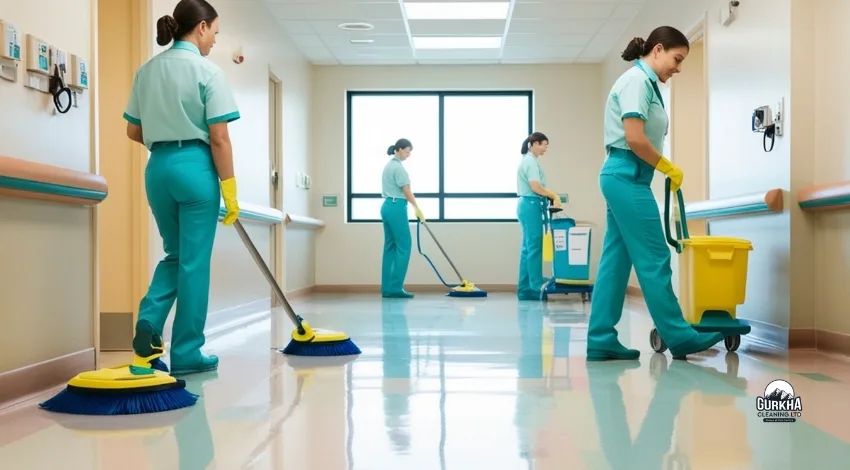
Healthcare cleaning services are specialist cleaning services for environments where patients receive care or where healthcare activities take place. That covers everything from a five-minute GP consultation to a residential care setting where people live full-time.
Depending on the facility, healthcare cleaning services can include the following:
- Routine and surface cleaning
- High-touch surface disinfection
- Treatment-room cleaning
- Washroom cleaning
- Floor care
- Waste handling, including clinical waste
- Shared-equipment cleaning
- Deep cleaning
- Terminal cleaning, where required
But healthcare facilities are not all the same. A GP surgery, a dental practice, and a care home have different layouts, different activities, and different levels of patient contact. So the next question is, which types of facilities actually need healthcare cleaning?
Need CQC-Compliant Healthcare Cleaning in Hampshire? Protect your facility and keep your audits stress-free with our risk-mapped, NHS 2025-aligned service.
Which Facilities Need Healthcare Cleaning Services?
Medical facility cleaning applies more broadly than most people assume. It covers:
- GP surgeries and medical centres, where high patient turnover means treatment rooms and waiting areas both need regular attention
- Dental practices, where clinical procedures create specific surface and instrument-adjacent cleaning needs
- Private clinics and outpatient facilities, which often see a similar mix of consultation and treatment spaces
- Physiotherapy and rehabilitation clinics, where shared equipment and treatment surfaces are in near-constant use
- Care homes and nursing homes, where residents live on-site continuously rather than passing through
- Hospices and other healthcare settings, which combine clinical care with a residential environment
Why Is Healthcare Cleaning Important?
Healthcare cleaning is important for the following reasons:
- Supporting infection prevention. Patients in medical settings are often more vulnerable to infection than the general public, and that’s largely why they’re there. Healthcare-associated infection (HAI) prevention depends heavily on environmental cleanliness — surfaces, equipment, and shared spaces are all potential transmission routes if cleaning falls short.
- Protecting patients and staff. Consistent cleaning protocols reduce risk for everyone using the building, not just the people receiving treatment.
- Reducing contamination on high-touch surfaces. Door handles, chair arms, reception counters, and shared equipment get touched by dozens of people a day. These points carry disproportionate risk relative to their size.
- Maintaining a safe and professional environment. Patients notice a clean, well-run facility, and it shapes their trust in the care they’re about to receive.
- Supporting inspection and compliance requirements. Healthcare cleaning isn’t just about appearance. Facilities need systems and evidence behind their cleaning procedures — CQC inspectors look for cleaning schedules, training records, and audit trails, not just a tidy waiting room on the day of a visit.
What Is Included in Healthcare Cleaning Services?
A compliant healthcare cleaning contract delivers clear, itemised attention across every area of the building:
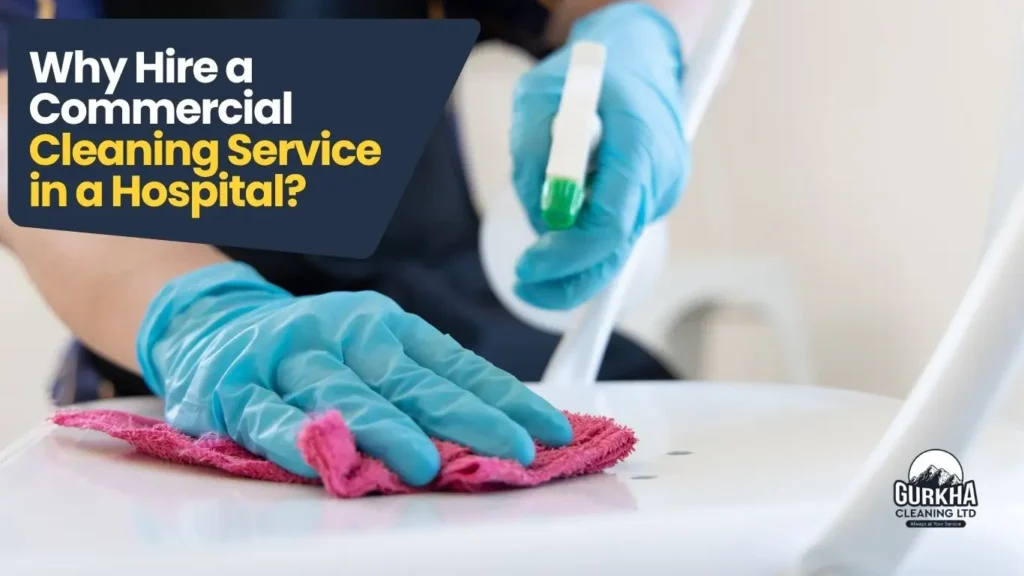
- Treatment and consultation room cleaning covers examination surfaces, treatment couches, worktops, door handles, light switches, and every other frequently touched surface in the room. These areas are typically cleaned between patients, not just at the end of the day.
- Reception and waiting area cleaning covers reception desks, chairs, door handles, handrails, touchscreens, and other high-traffic surfaces. These spaces see far more people passing through than clinical rooms, which changes how often they need attention.
- Washroom cleaning and disinfection happens multiple times a day in shared facilities, not once on a morning round.
- Floor cleaning is scheduled by zone, since a treatment room floor and a storage room floor don’t carry the same risk.
- High-touch surface disinfection is treated as its own task, separate from general surface cleaning, precisely because these points are where cross-contamination is most likely.
- Shared equipment cleaning covers keyboards, phones, blood pressure cuffs, and anything else handled by multiple staff or patients through the day.
- Waste handling includes clinical waste and sharps disposal, both common points for cross-contamination if procedures slip.
- Deep and terminal cleaning go beyond routine cleaning — deep cleaning on a scheduled basis and terminal cleaning triggered by discharge, isolation, or contamination events.
Healthcare Cleaning vs Commercial Cleaning
Standard commercial office cleaning and clinical healthcare cleaning serve entirely different purposes:
| Healthcare Cleaning | Commercial Cleaning |
| Risk-based, by zone | Generally routine |
| Infection-control focused | General hygiene focused |
| Clinical areas require specialist procedures | Usually standard workplace procedures |
| High-touch areas receive specific, frequent attention | Frequency depends mainly on usage |
| May require specialist or terminal cleaning | Usually doesn’t |
| Detailed cleaning records typically required | Documentation varies |
A healthcare facility can contain areas with different requirements under one roof. A treatment room and an administrative office in the same building should not automatically receive the same cleaning schedule.
What Cleaning Standards Apply to Medical Facilities in the UK?
UK medical facilities must navigate several overlapping regulatory frameworks:
- NHS Standards (2025): Replaced 2021 guidelines in February 2025. Assesses around 50 elements to assign a public star rating and introduces FR risk categories.
- FR1–FR6 Risk Categories: Sets cleaning and audit frequencies based on zone risk — from FR1 (very high risk, e.g. treatment rooms) to FR6 (very low risk, e.g. storage).
- NIPCM (SICPs): Universal baseline precautions for every patient interaction, covering hand hygiene, PPE, waste disposal, and surface decontamination.
- CQC Expectations: Inspectors require access to cleaning logs, staff training records, audit trails, and documented corrective action plans.
- NICE QS61: Quality benchmarks focused on systemic HAI prevention, catheter care, and antimicrobial stewardship.
- COSHH Compliance: The UK equivalent of what CDC/OSHA-compliant cleaning services cover in the US. Requires Safety Data Sheets, dilution tracking, risk assessments, and PPE training.
- EN Disinfectant Testing: Efficacy must be backed by current certificates — EN 1276 (bacteria), EN 13697 (surfaces), EN 14476 (viruses), and EN 16615 (wipes).
Which Areas of a Healthcare Facility Need the Most Attention?
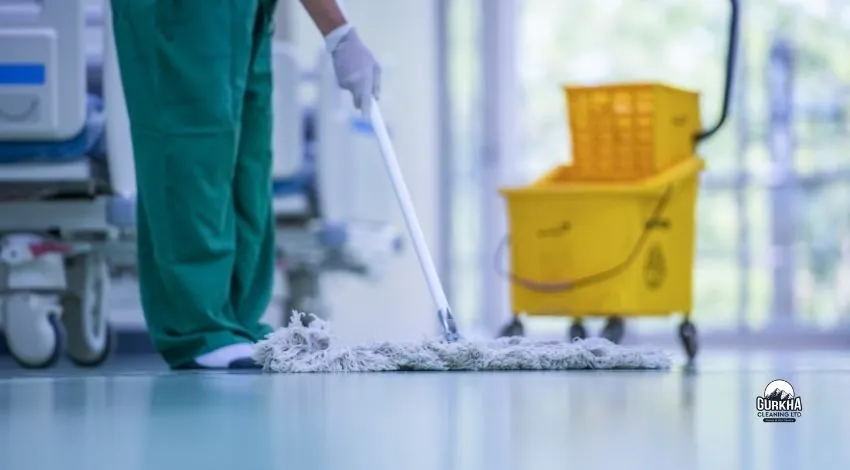
In any medical facility, certain high-risk hotspots require prioritised attention:
- Treatment and consultation rooms — higher-risk clinical areas may require more frequent cleaning and monitoring depending on their function and risk classification.
- Reception and waiting areas — high footfall means door handles, chair arms, and counters get missed more often than clinical rooms
- Washrooms — shared facilities need checking multiple times a day
- Shared equipment — keyboards, phones, and blood pressure cuffs need their own routine, separate from general surfaces
- Waste disposal points — clinical waste and sharps containers are a common point for cross-contamination if procedures slip
The goal isn’t to clean every part of a building at the same frequency. It’s to allocate time and resources according to actual risk and usage.
Medical Facility Cleaning Checklist
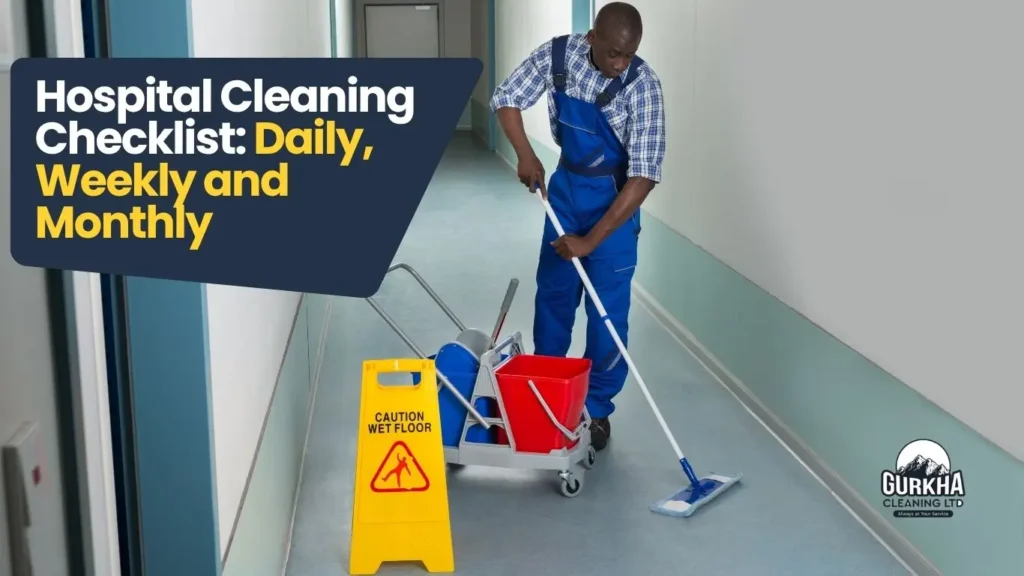
A practical medical facility cleaning checklist splits tasks by frequency, so the schedule stays realistic rather than trying to do everything, everywhere, every day. For a more detailed breakdown of tasks and cleaning procedures, see our hospital cleaning checklist.
Daily:
- Wipe down all high-touch surfaces (door handles, light switches, reception counters)
- Clean and disinfect treatment room surfaces between patients
- Clean washrooms
- Empty clinical waste bins and replace liners
- Check and restock hand hygiene stations
- Clean floors according to zone schedule
Weekly:
- Deep clean floors across all zones
- Disinfect shared equipment (keyboards, phones, blood pressure cuffs)
- Check colour-coded equipment is being used correctly and stored separately
- Review and top up PPE supplies
Periodic (monthly or as scheduled by risk category):
- Carry out a full visual audit against FR category targets
- Review COSHH documentation and Safety Data Sheets for currency
- Check staff training records and competency sign-offs
- Compile an audit summary for compliance records
Day-to-Day Compliance Tips for Medical Facilities
A checklist covers the tasks, but staying compliant day to day is often about habits rather than schedules.
- Act On Spills Immediately: Handle bodily fluids or chemical spills right away using biohazard spill kits rather than waiting for scheduled cleans.
- Keep Disinfectant Wipes at Point-of-Use: Clinical staff are significantly more likely to disinfect surfaces between appointments if certified wipes are within arm’s reach.
- Enforce Colour-Coding Systems: Never compromise on NPSA colour-coding (e.g., red for washrooms, yellow for isolation/clinical, blue for general areas). Cross-using cloths ruins compliance.
- Respect Chemical Contact Times: Ensure staff understand that disinfectants require wet contact time (often 1–5 minutes) to achieve full viral or bacterial kill rates.
- Report Damaged Surfaces Early: Cracked flooring, torn vinyl treatment couches, or chipped laminate cannot be disinfected—log them for repair immediately.
- Maintain Up-to-Date Training Matrices: Keep onboarding and refresher training certificates readily available to prevent CQC inspection flags.
What Are the Benefits of Professional Healthcare Cleaning?
Bringing in a specialist provider rather than managing cleaning in-house comes with real, practical advantages:
- Consistent procedures that follow FR categories and NHS 2025 standards as a matter of course, not something pieced together before an inspection
- Support for infection prevention through trained teams following proper protocols, cutting down on the missed spots that come with ad hoc, in-house cleaning
- Less pressure on clinical staff, who can focus on patient care instead of chasing cleaning schedules
- Better documentation, with training records, schedules, and logs already in place
- Audit-ready records, so there’s nothing to scramble together before a CQC visit
- Flexible scheduling around a facility’s actual opening hours, including early morning, evening, or emergency call-outs
- Specialist knowledge of zone mapping, product certification, and the practical detail that a generic commercial cleaning contract won’t cover
How to Choose a Healthcare Cleaning Company
A few questions are worth asking before signing with any cleaners:
- Do they understand FR categories and NHS 2025 standards, and can they explain how they’d map your building — not just recite the terminology?
- Can they provide current product certification, such as EN 1276 or EN 14476 test certificates, on request rather than “later”?
- Are staff properly trained and vetted, with a training matrix you can actually see?
- Are they insured and accredited? CHAS accreditation and BICSc-aligned training are reasonable minimums.
- Do they provide cleaning audits and records you can review, not just their word for it?
- What’s their coverage across your area? A provider based two hours away won’t respond quickly if something goes wrong on a Friday afternoon.
- Can they work around your opening hours, including out-of-hours or emergency cleaning?
If a provider can answer all of these without hesitation, they’re worth shortlisting.
Choose Gurkha Cleaning Ltd for Professional Healthcare Facility Cleaning
Based at our head office in Winchester, Gurkha Cleaning Ltd delivers disciplined, specialist healthcare facility cleaning to clinics, surgeries, dental practices, and care homes across Hampshire, including Winchester, Southampton, Portsmouth, Basingstoke, Salisbury, Andover, Petersfield, Aldershot, Farnham, Newbury, and Alton.
- Accredited Expertise: Our teams are CHAS-accredited, ISO 45001-certified, and BICSc-aligned, operating to recognised industry protocols.
- Vetted & Direct Staff: Every team member is directly employed, fully DBS-checked, and trained in infection control, COSHH, and colour-coded segregation.
- Risk-Mapped Schedules: We map your facility under NHS 2025 FR categories prior to contract commencement, providing fully transparent audit trails.
- Verified Products: We utilise eco-friendly virucidal solutions where appropriate.
Need a healthcare cleaning programme tailored to your facility? Explore our cleaning services.
Frequently Asked Questions
What are healthcare cleaning services?
Healthcare cleaning services are specialist cleaning and disinfection services designed for clinical and care environments, structured around functional risk levels to prevent healthcare-associated infections.
What is included in healthcare facility cleaning?
Routine surface wiping, high-touch point disinfection, clinical treatment room resets, washroom sanitisation, floor care, clinical waste segregation, and deep/terminal cleaning are included in healthcare cleaning.
How often should a healthcare facility be cleaned?
Cleaning frequency is determined by the Functional Risk (FR) category assigned to each area. High-risk treatment rooms (FR1/FR2) require daily and between-patient attention, while low-risk admin areas (FR5/FR6) follow lower-frequency schedules.
What is the difference between healthcare and commercial cleaning?
Healthcare cleaning is risk-mapped, infection-control focused, uses EN-certified disinfectants, and requires strict documentation for CQC audits. Commercial cleaning focuses primarily on general workplace presentation.
Do healthcare cleaners need specialist training?
Yes. Operatives must be trained in infection control, bloodborne pathogens, COSHH chemical safety, NPSA colour-coding, and correct PPE protocols.
How much do healthcare cleaning services cost?
Costs depend on building square footage, the ratio of high-risk clinical zones to low-risk areas, and required visit frequencies. Contact Gurkha Cleaning Ltd for a free, tailored site assessment and quote.
Final Thoughts
Healthcare cleaning isn’t simply about making a clinic or surgery look presentable. It’s a structured approach to maintaining hygiene, supporting infection prevention, and managing the different risks found throughout a healthcare environment.
The most effective programmes combine risk assessment, appropriate cleaning and disinfection, trained staff, the correct equipment, ongoing monitoring, and clear documentation. Get any one piece wrong and the rest of the system loses its value.
Want a cleaning programme that meets your needs? Get in touch with Gurkha Cleaning Ltd to discuss a programme built around your facility, from zone mapping to full audit evidence.