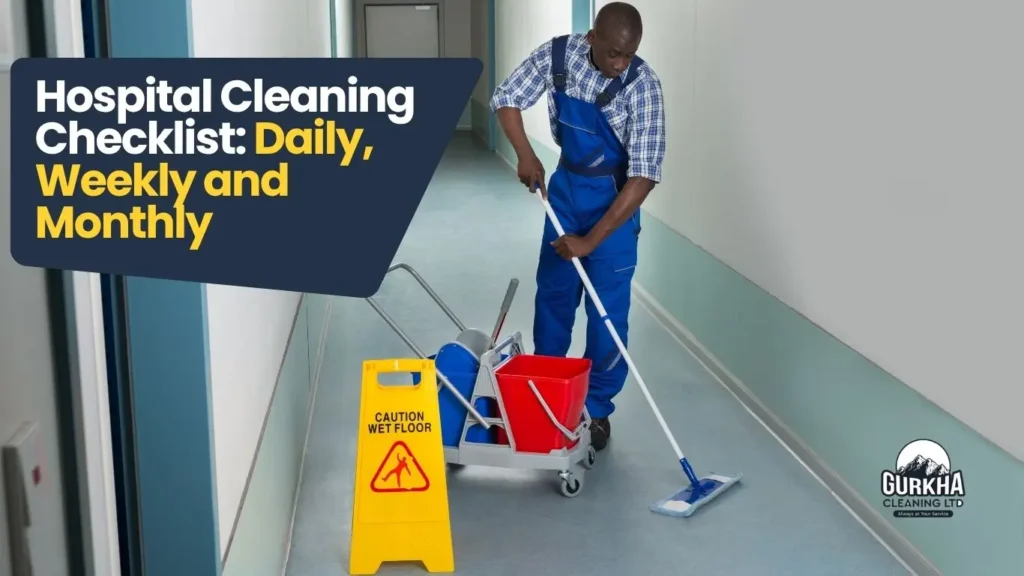
A hospital cleaning checklist works best when it’s split by frequency, not treated as one general list of areas to keep tidy. Some tasks need doing every day, others weekly or monthly, and knowing which is which is what keeps a room genuinely clean rather than just tidy on the surface.
This checklist sets out exactly that: daily, weekly and monthly cleaning for hospitals, along with protocol, standards and what happens between patients. It’s written with hospitals, private hospitals, clinics and healthcare facilities across Hampshire in mind, where cleaning has to work around patients, appointments and clinical activity every single day.
Quick Answer:
A hospital cleaning checklist is a structured schedule of cleaning and disinfection tasks organised by area, frequency and risk. It typically covers daily cleaning, high-touch surface disinfection, between-patient/terminal cleaning, deeper weekly tasks and periodic maintenance, with frequencies adapted to the type of healthcare setting and local infection-control procedures.
Why a Hospital Cleaning Checklist Matters
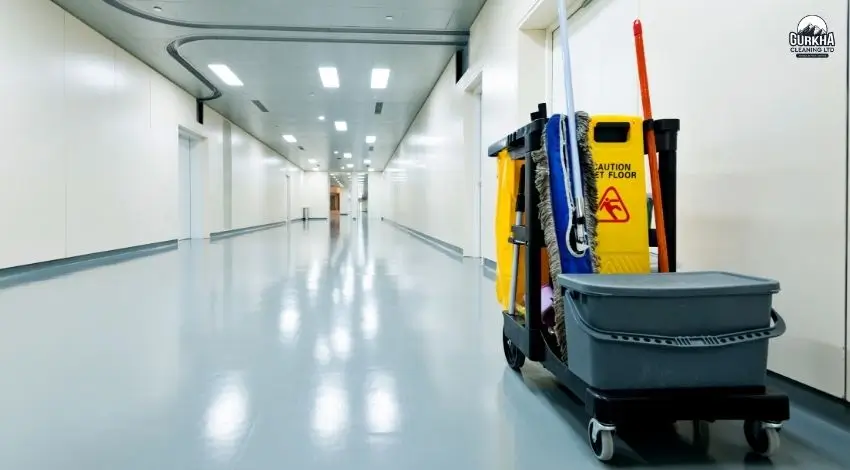
A missed step in a hospital doesn’t just look untidy; it’s a genuine infection risk. Patients, visitors, and staff all move through the same rooms, corridors, and washrooms throughout the day, and high-touch surfaces can pick up pathogens within hours of being cleaned.
A written checklist removes the guesswork. It gives cleaning staff a consistent standard to follow regardless of who’s on shift, gives facilities managers something to audit against, and gives infection prevention teams a paper trail when questions come up. Without one, cleaning quality tends to drift between staff, shifts and sites, and gaps only tend to surface during an audit or after an incident.
The same principle applies across any healthcare setting, not just wards. Clinics, treatment rooms, and GP surgeries carry the same risk from missed high-touch surfaces, just at a smaller scale. What changes between settings is frequency and depth, not whether a checklist is needed in the first place.
Looking for a cleaning team that specialises in healthcare? Our healthcare cleaning services are built around clinical environments, infection control and working with minimal disruption to patients and staff.
The Hospital Cleaning Checklist: Daily, Weekly and Monthly
Not every area of a hospital needs the same level of attention. Some tasks matter every day, others once a week or once a month. The tables below break the checklist down by frequency, so staff know exactly what to do and when.
Important: Cleaning frequencies vary according to the type of healthcare environment, patient activity, contamination risk and local cleaning policy. This checklist is a general planning guide and should be adapted to the facility’s risk assessment, infection prevention procedures and manufacturer instructions.
Daily Hospital Cleaning Checklist
Daily cleaning is the backbone of a hospital cleaning checklist. With patients, visitors, and clinical staff moving through the space constantly, this is where infection risk is highest if steps get skipped.
| Task | What It Involves |
|---|---|
| Preparation | Check the room’s status and any isolation precautions, then put on PPE and perform hand hygiene |
| High-touch surfaces | Disinfect bed rails, call buttons, light switches, and door handles |
| General surfaces | Clean the overbed table, bedside cabinet, and chairs |
| Bathroom fixtures | Disinfect the toilet, sink, taps, and grab rails |
| Windowsills & fittings | Wipe windowsills and any wall-mounted fixtures or marks |
| Waste | Empty bins without reaching inside them, wipe them down, and fit new liners |
| Supplies | Restock hand sanitiser, soap, paper towels, and PPE |
| Floors | Damp mop with an approved disinfectant, working backwards to the door, with a wet floor sign in place |
| Sign-off | Record or sign off the clean, if required |
If the room is occupied, pause for any clinical care taking place, use colour-coded cloths to avoid carrying anything between rooms, and clean shared items such as blood pressure cuffs or commodes according to the facility’s protocol.
Weekly Hospital Cleaning Checklist
| Task | What It Involves |
|---|---|
| Walls & fixtures | Wipe down walls, cupboard doors, and equipment stands |
| Behind & underneath | Move portable trolleys and stands to clean underneath and around them |
| High-reach points | Disinfect light switches, power outlets, and touchpoints missed in daily cleaning |
| Deep surface clean | A deeper clean of the bed frame and base, not just the surface |
| Bathroom deep clean | Scrub grout, behind and around the toilet, and under the basin |
| Taps & fittings | Descale taps and sinks to prevent limescale buildup. |
| Dispensers | Disinfect hand dryers and dispensers externally, not just the front |
| Storage & supplies | Clean equipment storage areas, including shelves, and check for expired supplies |
Monthly Hospital Cleaning Checklist
Monthly cleaning is where the bigger, less frequent jobs happen. These take longer, but they matter for hygiene and for keeping the space in good condition over time.
| Task | What It Involves |
|---|---|
| Floors | Deep-clean floors, including areas normally covered by furniture, and any drainage points in bathrooms |
| Air & ventilation | Service and clean air vents, filters, and extractor fans to stop dust and allergens circulating |
| Furniture & fittings | Move furniture and beds to clean underneath properly |
| Taps & showerheads | Deep-clean taps and showerheads to remove mineral build-up |
| Soft furnishings | Check and launder or replace curtains and privacy screens |
| High surfaces | Polish and disinfect furniture, storage shelves, and any high ledges or light fittings |
| Equipment | A more thorough clean of medical equipment, following manufacturer guidelines |
Is that everything a hospital room needs? Not quite. See our guide to healthcare cleaning services for the deeper clean that happens between patients, terminal cleaning.
High-Touch Surfaces: A Disinfection Priority Checklist
High-touch surfaces are where the chain of infection spreads fastest. A call button touched by a patient, then a member of staff minutes later, carries whatever was on it if it hasn’t been disinfected in between. These points need attention beyond the standard daily pass.
- Bed rails, call buttons, remote controls, and the overbed table
- Door handles, push plates, and light switches near the room entrance
- Chair armrests and any visitor seating in the room
- Flush handles, taps, grab rails, and the toilet seat in the attached bathroom
- Soap dispensers, paper towel holders, and hand sanitiser stations
- Shared equipment such as blood pressure cuffs, thermometers, IV poles, and commodes
- Keyboards, telephones, and nurse call systems used by staff throughout the shift
According to CDC hospital cleaning guidelines, frequently touched surfaces are a core focus of environmental cleaning in healthcare settings. In practice, this means disinfecting these points more often, not just during the daily clean.
Hospital Cleaning Protocol: What a Facility-Wide Plan Should Cover
The checklist above only works if it sits inside a written protocol covering the whole facility, not just individual rooms. A workable protocol sets out:
- Cleaning frequency by area, including which areas need cleaning more than once a day
- Colour-coded equipment systems to prevent cross-contamination between clinical and non-clinical spaces
- Safe storage and handling of cleaning chemicals in line with COSHH requirements
- Correct use of PPE for cleaning staff working in clinical environments
- Waste segregation, including clinical and non-clinical waste streams
- Spill response procedures
- Staff training and refresher requirements
- Supervision and quality checks
The right approach depends on the facility. A busy ward has different cleaning demands to a GP surgery or a treatment room, and a good protocol reflects that rather than applying one blanket schedule everywhere.
Infection Control Cleaning Checklist: Reducing Cross-Contamination Risk
This sits alongside the room and bathroom checklists above, with the focus specifically on reducing the risk of pathogens spreading between patients, staff and visitors.
- Prioritise high-touch surface disinfection, such as door handles, light switches, bedrails and shared equipment
- Use disinfectants proven effective against the pathogens relevant to the setting
- Follow isolation room procedures where required, including separate equipment and PPE
- Keep to the cleaning sequence, cleanest to dirtiest, top to bottom, to avoid spreading contamination
- Keep cleaning records for infection prevention audits
- Report outbreaks or suspected contamination immediately, rather than waiting for the next scheduled clean
According to CDC hospital cleaning guidelines, environmental cleaning and disinfection form a core part of infection prevention in healthcare settings, particularly around frequently touched surfaces. Cleaning supports infection control, but it works alongside clinical procedures and hand hygiene rather than replacing them.
Hospital Cleaning Standards: What Facilities Should Expect
Facilities and their cleaning contractors should be able to demonstrate:
- A written cleaning schedule for each area of the building
- Trained and vetted cleaning staff, with clear records of induction and refresher training
- Correct use and storage of cleaning chemicals in line with COSHH
- Appropriate PPE for staff working in clinical or higher-risk areas
- Quality checks and supervision, not just completed checklists
- Confidentiality and professional conduct from staff working in patient-facing areas
- Clear processes for site access, particularly out of hours
For healthcare facilities in Hampshire, whether that’s a private hospital in Southampton, a treatment centre in Basingstoke, or a clinic in Winchester, these standards need to work practically around real operating hours, not just look good on paper.
Why Choose Gurkha Cleaning Ltd for Hospital Cleaning in Hampshire
Choosing a cleaning contractor for a healthcare facility isn’t the same as choosing one for a standard commercial property. Patient safety, infection control and compliance all sit behind the work, which is why Gurkha Cleaning Ltd treats credentials and experience as seriously as the clean itself.
- Trained for healthcare specifically, not cleaning generally. Every operative placed in a healthcare setting is trained in infection control procedures, COSHH regulations, correct PPE use and colour-coded equipment protocols before starting on site.
- Built around CQC standards. Our protocols are mapped against the National Standards of Healthcare Cleanliness 2021, helping facilities meet the relevant functional risk requirements for patient care.
- Scheduled around your operations. Hospitals don’t stop, and our teams work early mornings, evenings, nights or weekends to fit clinical activity without disrupting patient care.
- Eco-friendly products that still meet clinical standards. We use stabilised aqueous ozone or EU Ecolabelled virucidal cleaners effective against pathogens, without the harsh chemical odours that can affect sensitive patients.
- Fully insured, DBS-checked and CHAS accredited. Every operative is a direct employee, not a subcontractor, so there’s proper management and accountability behind every site.
- Experience working across healthcare and commercial facilities in Hampshire, including Portsmouth, Salisbury, Andover, Petersfield, Newbury, Farnham, Aldershot and Alton
Final Thoughts
A hospital cleaning checklist only works if it’s followed consistently, adapted to the realities of a busy clinical environment, and backed up by proper training and supervision. The difference between a room that looks clean and one that’s genuinely been cleaned to a healthcare standard often comes down to the process behind it.
If you’re reviewing your current cleaning arrangements, it’s worth asking whether your contractor understands the difference between routine cleaning and terminal cleaning, how they handle infection control, and how their staff are trained and vetted for work in patient-facing environments.
Ready to see what a proper hospital cleaning checklist looks like at your facility? Contact us today for a free, no-obligation quote.
Frequently Asked Questions
How often should hospital rooms be cleaned?
Patient rooms are typically cleaned at least once daily, with high-touch surfaces disinfected more often on wards with higher turnover. Weekly and monthly tasks then cover the deeper jobs that don’t need doing every day.
What's the difference between daily, weekly and monthly cleaning?
Daily cleaning covers high-touch surfaces, floors, waste and restocking. Weekly cleaning goes a level deeper, covering walls, fixtures and equipment storage. Monthly cleaning handles bigger jobs like vents, furniture, and deep floor cleaning.
What should a hospital cleaning protocol include?
A working protocol sets out cleaning frequency by area, colour-coded equipment systems, COSHH-compliant chemical storage, PPE requirements, waste segregation, spill response, staff training and supervision.
What does an infection control cleaning checklist focus on?
It prioritises high-touch surface disinfection, correct use of disinfectants, isolation room procedures, keeping to a clean-to-dirty cleaning sequence, and keeping records for infection prevention audits.
What standards should a hospital cleaning contractor meet?
Contractors should be able to show a written cleaning schedule, trained and vetted staff, correct chemical storage under COSHH, appropriate PPE, and quality checks beyond a completed checklist.
Do hospital cleaning staff need special training?
Yes. Staff working in clinical environments need training in infection control, correct PPE use, COSHH-compliant chemical handling and colour-coded equipment systems, on top of general cleaning skills.
How often should high-touch surfaces be disinfected?
More often than the rest of the room. Points such as bed rails, call buttons, door handles and shared equipment need disinfecting multiple times a day in busier areas, not just as part of the standard daily pass.