Hospitals and healthcare facilities carry a different level of cleaning responsibility than standard commercial buildings. Understanding why hire a commercial cleaning service in hospital settings comes down to safety; a missed high-touch surface or an inconsistently cleaned waiting room isn’t just untidy, it directly affects patient health outcomes.
Facilities managers and healthcare administrators outsource hospital cleaning for three practical reasons: maintaining consistent hygiene routines, meeting mandatory audit requirements, and allowing clinical staff to focus on patient care. This becomes critical when internal resources are stretched or standards start to slip.
Below are the practical reasons healthcare organisations across Hampshire choose to outsource hospital cleaning, along with what a specialised service actually involves.
Quick Answer:
Hospitals hire commercial cleaning services to control infection risks, maintain strict regulatory compliance with bodies like the CQC, and ensure consistent, auditable hygiene standards. Professional healthcare cleaners deploy specialised virucides, colour-coded contamination containment, and flexible staffing, reducing healthcare-associated infections (HAIs) while allowing clinical staff to focus entirely on patient care.
What Does Commercial Hospital Cleaning Actually Involve?
Hospital cleaning services cover far more ground than a standard commercial clean. In practice, this can include:
- Patient rooms and bedside areas
- Washrooms and toilet facilities
- Waiting rooms and reception areas
- Corridors and communal spaces
- Treatment rooms and clinical spaces
- Staff rooms and administrative areas
- High-touch surfaces such as door handles, light switches, handrails, and reception desks
Each of these areas carries a different level of risk and requires a distinct cleaning approach. Medical facilities using our services in Winchester benefit from custom protocols tailored to specific functional zones, ensuring treatment rooms receive stricter disinfection than staff break rooms.
Need comprehensive cleaning tailored to your clinical risk levels? Explore our dedicated healthcare cleaning services to see our tailored infection control plans in action.
Why Should Hospitals Hire Commercial Cleaning Services?
There isn’t one single reason healthcare providers bring in external support; it’s usually a combination of infection control, compliance pressure, and stretched clinical resources. Below are the main factors that push facilities managers to hire a commercial cleaning service in hospital facilities.
Infection Control and Reducing Healthcare-Associated Infections (HAIs)
Infection control is one of the main reasons hospitals bring in a commercial cleaning provider. Healthcare-associated infections (HAIs) can develop when pathogens such as MRSA or C. diff spread through contact with surfaces, equipment, or hands that haven’t been properly cleaned.
A commercial cleaning team follows structured cleaning routines and uses hospital-grade disinfection products designed to reduce this risk. This isn’t about cleaning more – it’s about cleaning the right areas in the right order using the right products every time.
High-Touch Surfaces and Cross-Contamination
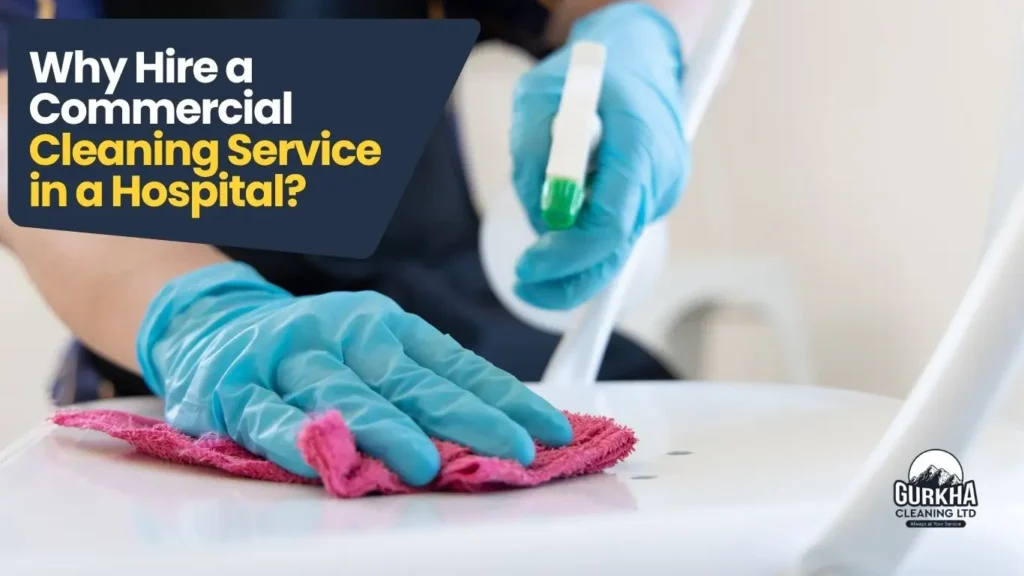
High-touch surfaces are one of the biggest risk points in any healthcare setting. Door handles, lift buttons, bed rails, call buttons, and reception counters get touched by dozens of people throughout the day.
Cross-contamination happens when cleaning tools or hands move pathogens from one surface or area to another. This is why many hospital cleaning contracts use colour-coded cloths and equipment, keeping tools used in washrooms separate from those used in patient areas or kitchens. It’s a simple system, but it makes a real difference to how well contamination is contained.
Biohazard Cleaning
Hospitals occasionally need biohazard cleaning, dealing with spills of blood or bodily fluids that carry an infection risk. This type of cleaning requires proper PPE, correct disposal procedures, and staff who understand the health and safety requirements involved.
This is specialist work. It shouldn’t be handled the same way as a routine spill, and it’s one of the clearest examples of why healthcare cleaning needs trained professionals rather than general cleaning staff.
Indoor Air Quality
Air quality is easy to overlook, but it matters just as much as surface cleanliness in a healthcare setting. Dust, allergens, and airborne particles that build up in vents and ductwork can affect patients with respiratory conditions, and poor air quality can undermine even the most thorough surface cleaning.
Commercial cleaning providers working in healthcare settings should factor ventilation points, vents, and communal air spaces into their cleaning schedule, not just floors and surfaces. It’s a smaller line item on a cleaning contract, but it’s one that directly affects patient wellbeing.
Audit Readiness and Compliance Documentation
Healthcare facilities in England must satisfy cleanliness expectations enforced by the Care Quality Commission (CQC). However, meeting these requirements isn’t just about physical cleaning; it’s about proving it happened.
This matters tremendously at inspection time. Facilities managers need to present clear, auditable evidence showing what was cleaned, how often, to what standard, and using which disinfectants. Specialised commercial cleaning providers use tools like a structured hospital cleaning checklist alongside digital logs, shift sign-offs, and COSHH compliance files to build a transparent paper trail that keeps your facility audit-ready.
Patient Satisfaction
Patient satisfaction is shaped by more than clinical care. A clean, well-maintained environment gives patients and visitors confidence that a facility is being properly looked after. Untidy waiting rooms, marked floors, or unpleasant odours can undermine that confidence quickly, even where clinical standards are high.
This confidence extends to how patients rate their overall experience, not just the treatment they received. A hospital that looks and feels cared for reassures people at a time when they’re often already anxious.
Workforce Safety and Productivity
A properly cleaned and disinfected environment protects staff as much as patients. Nurses, doctors, and support staff are exposed to the same surfaces and equipment throughout their shifts, and a poorly maintained environment increases their own risk of picking up an infection.
Fewer infections among staff generally means fewer sick days and a more consistent workforce on the ground. It’s a benefit that’s easy to overlook, but it has a direct impact on how a hospital runs day to day.
Freeing Up Clinical Staff
Nurses, doctors, and healthcare assistants are not cleaning specialists, and their time is better spent on patient care. Bringing in a commercial cleaning team removes cleaning responsibilities from clinical staff and puts them in the hands of people trained specifically for the job.
This also reduces the risk of cleaning being done inconsistently by staff who are already stretched across clinical duties. A dedicated cleaning team means the task gets done properly, every time, rather than fitted in around patient care.
Is Outsourcing Hospital Cleaning Cost-Effective?
Yes, outsourcing is cost-effective for most facilities, though the financial benefit depends on your facility’s size, bed capacity, and clinical risk levels.
While in-house cleaning gives management direct oversight, running an internal team carries substantial hidden costs from specialised equipment procurement to managing sick leave coverage.
Key Financial Advantages of Outsourcing:
- Eliminated Overheads: Removing the need to recruit, vet, train, and manage dedicated cleaning staff directly.
- Capital Expenditure Savings: Hospital-grade equipment, floor scrubbers, and specialised disinfectants are supplied, maintained, and replaced entirely by the contractor.
- Flexible Staffing: Cleaning schedules can scale up during peak seasons or infection outbreaks without carrying fixed payroll burdens during quieter periods.
- Mitigated Infection Costs: Healthcare-associated infections (HAIs) are estimated to cost the NHS around £2.7 billion a year across England, primarily driven by extended bed stays and emergency treatments. Professional infection control directly protects your bottom line.
If you are evaluating your current cleaning budget, compare more than just hourly rates. Factor in the reliability, specialised training, and financial risk protection a professional commercial cleaner provides.
What Cleaning Standards Do Hospitals Have to Follow?
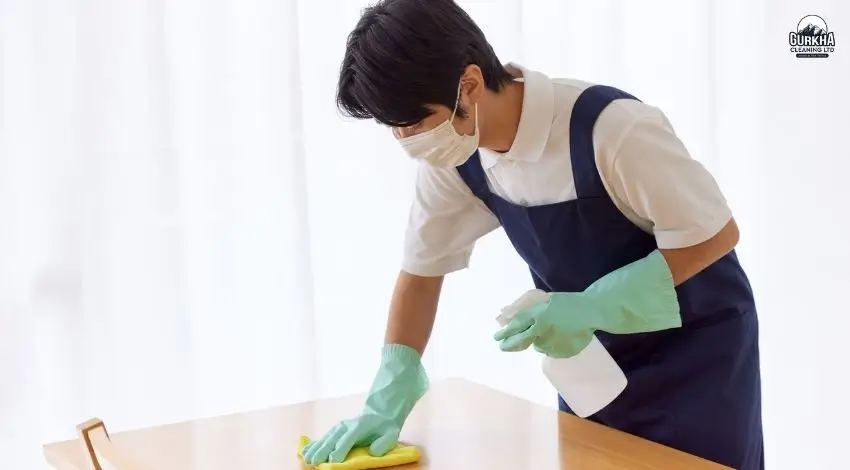
Healthcare facilities in England must comply with strict infection prevention and control (IPC) frameworks. Primary guidance stems from the National Standards of Healthcare Cleanliness 2021 alongside Care Quality Commission (CQC) inspection criteria.
To pass inspections and maintain safety, facilities must demonstrate:
- Risk-Based Cleaning Schedules: Defined cleaning frequencies split by functional risk categories (e.g., operating theatres vs. administrative offices).
- Correct Disinfection Protocols: Approved disinfectants matched to specific surface types and pathogen risks.
- Safe Waste Management: Proper segregation, handling, and disposal of clinical and biohazard waste.
- Certified Staff Training: Cleaning personnel trained in infection control, PPE usage, and cross-contamination prevention.
- Auditable Documentation: Detailed records and audit trails proving cleaning occurred as scheduled.
Tip for Facilities Managers: Always request proof of industry accreditation (such as BICSc, CHAS, or ISO standards) and verified insurance before hiring a commercial cleaning contractor. For a deeper breakdown of compliance requirements, read our complete healthcare cleaning services guide.
In-House vs. Outsourced Hospital Cleaning
Choosing between an internal cleaning team and a commercial provider depends on your facility’s operational setup. Evaluating a few practical criteria can help facilities managers determine the best approach:
| Decision Factor | In-House Cleaning Team | Outsourced Commercial Service |
|---|---|---|
| Consistency | Vulnerable to coverage gaps during staff leave, sickness, or sudden turnover. | Guaranteed shift coverage with pre-vetted, qualified replacement staff. |
| Specialized Training | The facility bears the time and cost of ongoing infection control training. | Cleaners arrive fully trained in healthcare disinfection and IPC protocols. |
| Accountability | Relies on manual internal logging, increasing risk during CQC audits. | Provides structured, auditable cleaning logs and transparent compliance records. |
| Flexibility | Difficult to scale up quickly during seasonal illness spikes or outbreaks. | Flexes staffing levels up or down on demand without fixed payroll burdens. |
If your current arrangement leaves room for uncertainty across these key operational areas, transitioning to specialised healthcare providers, such as our dedicated teams in Portsmouth, helps guarantee consistent shift coverage and transparent CQC audit trails.
How to Choose the Right Commercial Cleaning Contractor for Your Hospital
Not all commercial cleaning companies possess the operational setup required for healthcare environments. When evaluating potential vendors, facilities managers should request verifiable evidence across four core operational criteria before issuing a contract:
- Verified Healthcare Accreditations: Request formal documentation of recognised cleaning and safety accreditations to confirm compliance with national hygiene standards.
- Specialised IPC & Infection Training: Ensure the provider’s operatives complete specific training modules in hospital-grade virucides, colour-coded cross-contamination containment, and biohazard protocols.
- Auditable Digital Tracking: Confirm the contractor provides transparent, real-time logging systems to support CQC inspection readiness.
- Vetted Staffing & Legal Coverage: Require full public liability insurance alongside comprehensive background checks for all personnel entering clinical zones.
Looking for a compliant, fully vetted cleaning contractor in Hampshire? Explore our CQC-aligned healthcare solutions at Gurkha Cleaning Ltd to request a tailored site audit for your facility.
Choose Gurkha Cleaning Ltd for Healthcare Facilities in Hampshire?
Healthcare providers across Winchester, Southampton, Portsmouth, and wider Hampshire trust Gurkha Cleaning Ltd to deliver on these exact operational requirements:
- Fully Accredited & Certified: We back our service with corporate BICSc membership, CHAS accreditation, and ISO certifications.
- Healthcare-Trained Operatives: Every cleaner undergoes rigorous pre-placement training in infection prevention, COSHH safety, PPE usage, and strict colour-coded tool protocols.
- Continuous CQC Alignment: Our cleaning schedules and reporting workflows are mapped directly to the National Standards of Healthcare Cleanliness 2021.
- 100% Directly Employed & DBS-Checked: We never outsource to unvetted subcontractors; our staff are directly employed, background-checked, and insured.
- Eco-Friendly Clinical Virucides: We utilise EU Ecolabelled disinfectants and stabilised aqueous ozone that eradicate 99.99% of pathogens without harsh chemical fumes.
Final Thoughts
Hospital hygiene requires specialised execution by trained professionals who understand the operational demands of clinical spaces. Maintaining consistently high standards directly protects patient health, staff safety, and your facility’s operational reputation.
If you are reviewing your current cleaning setup, prioritise contractors who offer transparent processes, digital record-keeping, and clear accountability over general promises.
Ready to upgrade your hospital cleaning standards? Contact Gurkha Cleaning Ltd today to request a custom site audit and discuss your facility’s cleaning requirements.
FAQs
Why should hospitals hire commercial cleaning services?
Outsourcing guarantees dedicated infection prevention experts who maintain audit-ready hygiene routines while freeing clinical teams to focus entirely on patient care.
Is outsourcing hospital cleaning cost-effective?
Yes, it converts heavy capital expenses like machinery procurement, specialised training, and absenteeism management into a predictable, flexible operating budget.
What cleaning standards do hospitals have to follow?
Facilities in England must comply with CQC inspection criteria and the National Standards of Healthcare Cleanliness 2021 using risk-stratified cleaning schedules.
How do commercial cleaners prevent cross-contamination?
Teams strictly isolate equipment using mandatory four-colour coding systems alongside hospital-grade virucides and single-use microfibre technology.
What do CQC inspectors look for regarding cleanliness?
Inspectors evaluate physical surface hygiene alongside verifiable records, including digital cleaning logs, COSHH safety files, and staff IPC training certificates.
Can commercial cleaning be done without disrupting patient care?
Yes, contractors deploy flexible shift patterns across overnight, early morning, and weekend hours to adapt seamlessly around clinical workflows.
How difficult is transitioning to an outsourced cleaning contractor?
A professional handover is straightforward, using structured site audits, customised KPI frameworks, and full compliance with UK TUPE regulations for existing staff.