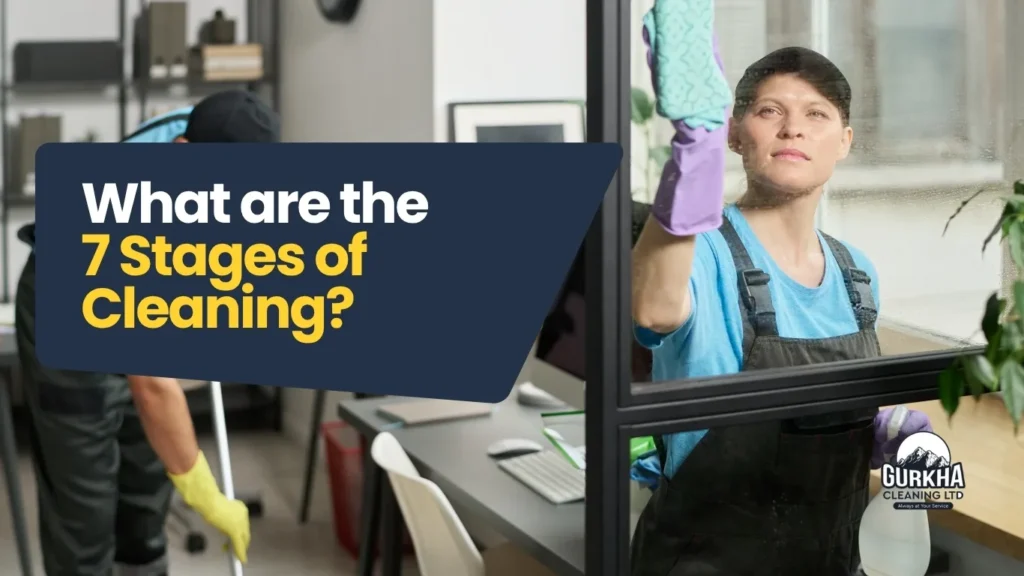
Most people clean regularly. But honestly, a lot of them still miss spots, still get that stale smell after an hour, or wonder why things never feel truly clean.
The problem usually isn’t effort. It’s that there’s no proper system behind it. You can spend an hour cleaning a room and still leave bacteria on surfaces, dust on shelves, or dirt on floors simply because the steps weren’t done in the right order.
Professionals from commercial cleaners to hospital EVS teams follow a structured sequence every single time. It’s called the 7 stages of cleaning, and it works whether you’re running an office, a restaurant, or just trying to get your home properly sorted.
In this guide, you’ll learn exactly what those stages are, why the order matters, and how to apply them in real life.
Tired of cleaning that never feels truly done? Gurkha Cleaning Ltd follows this exact system on every job.
Quick Overview of The 7 Stages of Cleaning
- Waste Removal: Clear rubbish, empty bins, and remove clutter.
- High Dusting: Dust ceilings, shelves, vents, and other high surfaces.
- Damp Wiping: Clean and wipe all surfaces and high-touch areas.
- Restroom Cleaning: Sanitize and disinfect toilets, sinks, and bathroom fixtures.
- Restocking: Refill soap, paper towels, toilet paper, and other supplies.
- Floor Cleaning: Vacuum carpets and mop hard floors as the final cleaning step.
- Final Inspection: Check the area to ensure nothing has been missed and the space meets cleanliness standards.
Why Professional Cleanliness Matters for You ?
There’s a reason professional cleaners follow a standard cleaning process and don’t just wipe things down randomly.
A proper system keeps spaces genuinely clean, not just visually clean, which is exactly why professional cleaning is essential for your business. It reduces germs through correct sanitation cleaning steps. It prevents missed spots by giving you a consistent structure to follow. And for commercial spaces, it directly affects the impression your business makes on people walking through the door.
Basically, smart cleaning saves time. It also gives consistently better results than just grabbing a cloth and hoping for the best.
What Are the 7 Stages of Cleaning? Also Known as the 7-Step Cleaning Process
The 7 stages of cleaning are a structured, step-by-step system used by professional cleaners to ensure every area is covered without missing spots or causing cross-contamination. Here’s each stage explained:
Step 1: Remove Waste / Trash
Start by clearing everything that doesn’t belong: rubbish, used linens, empty containers, and any visible clutter lying around. Empty every bin in the space and replace the liners before moving on to anything else. This is the foundation of the whole clean.
Why this step matters: If you skip this and go straight to wiping or mopping, you’ll just be pushing dirt around. Clearing waste first gives you a clean working area and stops debris from spreading.
Pro Tip: Always carry extra bin liners. Stopping mid-job to find a replacement liner breaks your flow and wastes time.
Step 2: High Dusting
Clean everything above shoulder height: ceiling fans, air vents, shelves, light fixtures, tops of cabinets, and any high ledges. Use an extendable tool so you can reach properly without rushing. Always work from the top down, no exceptions.
Why this step matters: Dust falls. If you clean floors first and then dust, you’ve just dirtied the floors again. Doing this early means the dust that falls gets picked up later when you vacuum or mop.
Pro Tip: Use a microfibre cloth or an extendable duster. Microfibre actually traps dust rather than moving it around, making a real difference.
Step 3: Damp Wiping Surfaces
Now work through all the horizontal and high-touch surfaces in the space: desks, tables, countertops, chairs, windowsills, door handles, light switches, and anything else people regularly touch.
Use the appropriate cleaning solution for each surface type rather than one product for everything.
Why this step matters: Dry dusting can’t remove stuck-on grime, grease, or fingerprints. Damp wiping takes care of all that and leaves surfaces genuinely clean, not just dusted.
Pro Tip: Use separate cloths for different zones to avoid cross-contamination, a basic rule covered in detail in common commercial cleaning mistakes and How to Avoid Them.
Step 4: Clean Restrooms
Restrooms get their own dedicated stage because they carry the highest hygiene risk of any area in a building. Clean and disinfect toilets, sinks, mirrors, taps, and floors thoroughly.
Pay extra attention to high-touch points that get overlooked: flush handles, door handles, light switches, and soap dispensers.
Why this step matters: Bacteria spread fast in restroom environments. A surface that looks clean might still be harbouring pathogens if you’ve only wiped it rather than disinfected it.
Pro Tip: Let your disinfectant sit for the recommended dwell time before wiping it off. Most products need 30 seconds to a few minutes to actually work. Wiping too early reduces effectiveness.
Struggling to keep restrooms truly clean and germ-free? Gurkha Cleaning Ltd follows strict sanitation cleaning steps and proper disinfection methods to protect your space.
Step 5: Restock Supplies
Before finishing up, go through and refill everything: soap dispensers, paper towels, toilet roll, hand sanitiser, and any other consumables in the space.
Check levels in every room, not just the ones that visibly looked low when you started.
Why this step matters: A space can look spotless but still fail on hygiene if there’s no soap at the sink. In commercial environments, especially, empty supplies create a poor experience and a hygiene risk.
Pro Tip: Do a stock check before you leave rather than after. Much easier to grab supplies now than to come back for a second visit.
Step 6: Mop or Vacuum Floors
Now tackle the floors: vacuum all carpeted areas and damp mop hard floors. Work from the furthest corner of the room towards the exit so you’re never stepping back onto areas you’ve already cleaned.
Take your time with this step rather than rushing through it.
Why this step matters: Floors collect everything: dust from high dusting, debris from waste removal, and footfall from the whole process. Cleaning them last means you’re picking up all of that in one final sweep.
Pro Tip: Match your method to the surface. Vacuum for carpets and soft flooring. Damp mop for hard floors. Using a wet mop on carpet or a dry mop on tiled floors just doesn’t do the job properly.
Step 7: Final Inspection
Walk through every single area you’ve cleaned. Look for anything that was missed: a dusty corner, a smudged mirror, a bin that wasn’t emptied, a surface that wasn’t wiped, or any cleaning tool or product
left behind. Check the space from different angles and in different lighting before calling the job done.
Why this step matters: This is your quality control. It’s the difference between “I think that’s done” and actually being sure. In professional settings, skipping this step is one of the most common reasons for client complaints. Learn more about commercial hygiene tips that keep standards consistently high.
Pro Tip: Change your viewing angle, get lower, and look across surfaces rather than down at them. You’ll spot things you’d normally walk straight past.
Why This 7-Step Cleaning Process Works So Well
This process works because it’s built on logic, not habit. Every step has a reason, and every stage sets up the one that follows. Here’s why it consistently delivers better results:
- Follows a top-to-bottom cleaning workflow steps order that prevents rework and re-cleaning the same areas
- Each stage sets up the next one, so nothing is done out of order or repeated unnecessarily
- Keeps high-risk areas like restrooms handled at the right point to avoid spreading contamination to clean zones
- Using a cleaning procedure checklist like this removes guesswork; you follow the process and cover everything, every time
- Keeps results consistent across different cleaners, different days, and different spaces
- This is the standard cleaning process trusted by professional and commercial cleaning teams across industries worldwide
It hasn’t changed much over the years because it works. Follow the process, cover everything, and the results speak for themselves.
Where Can You Apply Cleaning Process?
The 7 stages of cleaning are flexible enough to apply across very different environments. Here’s how they adapt:
| Environment | Primary Focus | Key Adaptations |
|---|---|---|
| Commercial Offices | High-traffic public zones | Daily maintenance of shared touchpoints; scheduled deep cleans for carpets. |
| Food Industry | Degreasing & compliance | Strict sanitation cleaning steps to eliminate oils, organic residue, and bacteria. |
| Residential / Homes | Comfort & dust management | Room-by-room structural workflow for consistent domestic results. |
| Healthcare Facilities | Infection control | Hospital-grade disinfectants, rigorous dwell times, and strict cross-contamination zones. |
Commercial Cleaning (Offices & Retail)
In offices and retail spaces, you’re typically dealing with high-traffic areas that need daily maintenance alongside periodic deep cleaning stages for upholstery, carpets, and shared equipment. The 7-step process handles daily cleans well through structured commercial cleaning, while deep cleaning adds extra layers like steam cleaning chairs or descaling kitchen equipment on a scheduled basis.
Food Industry Cleaning
Food environments have stricter requirements. You’re removing grease, oils, and food residue that standard cleaning can’t always handle. Hygiene compliance is non-negotiable here, and the sanitation cleaning steps become especially critical. Cross-contamination between surfaces is a serious risk, so separate equipment for different zones is standard practice.
Residential / House Cleaning
For house cleaning stages, a room-by-room approach works well, similar to how domestic cleaning services structure their workflow for consistent home results. Take carpet cleaning as an example; the stages within that process alone include pre-treatment, agitation, extraction, and protection. The same logical sequence, just applied more specifically.
Healthcare & High-Risk Environments
Here, every stage is elevated. Hospital-grade disinfectants replace standard products. Dwell times are strictly observed. The professional cleaning process in these settings follows infection control standards that go well beyond typical commercial cleaning, but the 7-stage structure still underpins it.
Looking for a reliable cleaning service in Hampshire? Gurkha Cleaning Ltd covers Winchester, Portsmouth, Andover, Salisbury and other surrounding areas. Whether it’s a home, office, or commercial space, our cleaning team is ready to help you. Explore our cleaning services in Hampshire
Recommended Tools and Best Practices for Cleaning
Having the right tools makes the whole process faster, easier, and more effective. You don’t need to spend a fortune; the basics cover most situations.
- Microfiber cloths: more effective than cotton at trapping dust and bacteria
- Extendable duster: essential for high dusting without a ladder
- Mop and bucket: for hard floors, always wring well to avoid over-wetting
- Vacuum cleaner: ideally with a HEPA filter for carpets and soft furnishings
- Appropriate cleaning products: not just “all-purpose” for everything; match the product to the surface and the task
Following the proper cleaning workflow steps matters just as much as the tools. Even the best equipment won’t help if you’re cleaning floors before dusting or wiping surfaces before removing waste.
Common Mistakes You Should Avoid While Cleaning
Even with the best intentions, small habits can quietly undo an otherwise good clean. These are the most common mistakes people make and how to avoid them:
- Skipping the dusting stage: Surfaces that look clean often aren’t, because fine dust settles everywhere. Skipping this means you’re cleaning around the problem, not solving it
- Cleaning floors first: Really common mistake. If you vacuum or mop before dusting or wiping surfaces, dust falls right back down on the clean floor
- Not disinfecting properly: Wiping a surface with a damp cloth isn’t the same as disinfecting it. Without the right product and proper contact time, you’re not actually killing pathogens
- Rushing the final inspection: When you’re tired and nearly done, it’s tempting to skip this step. That’s exactly when things get missed
Most cleaning mistakes don’t come from lack of effort; they come from doing the right things in the wrong order. Stick to the process, and these problems take care of themselves.
Understanding the difference between domestic cleaning and commercial cleaning matters for getting the approach right. The right process for the right environment is what separates a clean that looks good from one that actually is.
Tips for Better Cleaning Results
Good cleaning isn’t just about working hard; it’s about working smart. These simple tips make a real difference when followed consistently:
- Always clean from top to bottom, no exceptions
- Use the right tool for each task, not just whatever’s nearby
- Stick to a routine so no area gets neglected between cleans
- Don’t rush through steps, especially disinfecting; it needs time to work
- Keep a simple cleaning procedure checklist you can tick off as you go
Small habits done consistently beat a big effort done occasionally. Follow these tips alongside the 7 stages of cleaning and you’ll notice the difference straight away.
Choose Gurkha Cleaning Ltd for Professional Cleaning Results
Cleaning isn’t just about effort; it’s about having the right system behind it. Here’s what makes Gurkha Cleaning Ltd a reliable choice:
- Follows the 7 stages of cleaning on every single job – no shortcuts, no skipped steps
- The team is trained to follow proper cleaning steps in order for consistent results every time
- Uses professional-grade tools and products that are safe for both people and surfaces
- Covers everything from home cleans to full commercial spaces.
- Every job ends with a thorough final inspection because finishing isn’t the same as finishing well
Stop second-guessing whether the job got done properly. Don’t just take our word for it; see what our clients say. With Gurkha Cleaning, the right process is already in place every time, without exception.
Final Thoughts
Honestly, the 7 stages of cleaning aren’t complicated. But most people and even some cleaning services skip steps, change the order, or rush through without a proper system behind it.
What makes this method work isn’t just the steps themselves. It’s the logic behind the sequence. Waste first, floors last, and a final inspection every single time. Each stage is there for a reason, and skipping even one can undo the work done before it.
Whether you’re managing a commercial space or just trying to get your home properly clean, following these stages of cleaning process gives you a clear framework that removes the guesswork. You stop wondering if you’ve missed something because the process covers it for you.
Start using it once and you’ll see the difference immediately. It just makes sense.
Ready for a clean that actually gets done properly, every single time? Contact us today and let the right team handle it for you.
FAQs
What are the 7 stages of cleaning in order?
The 7 stages of cleaning in order areas are as follows: remove waste, high-dusting, damp-wipe surfaces, clean restrooms, restock supplies, mop or vacuum floors, and final inspection. This sequence is designed to prevent cross-contamination and avoid rework.
Why is high dusting done first in the cleaning process?
Dust falls downward. Doing high dusting before wiping surfaces or cleaning floors means the dust that falls is picked up in later stages instead of dirtying areas you’ve already cleaned.
What is the difference between cleaning and sanitizing?
Cleaning removes visible dirt and debris. Sanitising reduces bacteria to safe levels. Disinfecting kills harmful microorganisms. Each serves a different purpose, and not every situation requires all three.
Are the 7 stages of cleaning used at home?
Yes. While the system is widely used in commercial and healthcare settings, the same house cleaning stages apply at home. The order and principles are the same, even if the products and scale are different.
How often should you follow the full cleaning process?
For commercial spaces, a full clean is typically done daily or per shift. For homes, a full 7-stage clean weekly is a good standard, with quick maintenance cleans in between.
What is included in a professional cleaning process?
A professional cleaning process includes all 7 stages carried out in the correct order, using appropriate tools and products for each surface type, with a final inspection to ensure quality before sign-off.
Why is final inspection important in cleaning?
It’s your quality check. Without it, missed spots, forgotten tools, or improperly cleaned areas go unnoticed. In professional settings, it’s what separates a consistent, reliable service from an inconsistent one.
Can skipping cleaning steps affect hygiene?
Yes, significantly. Skipping steps, especially disinfecting or the final inspection, can leave pathogens on surfaces and create a hygiene risk, even when the space looks clean visually.