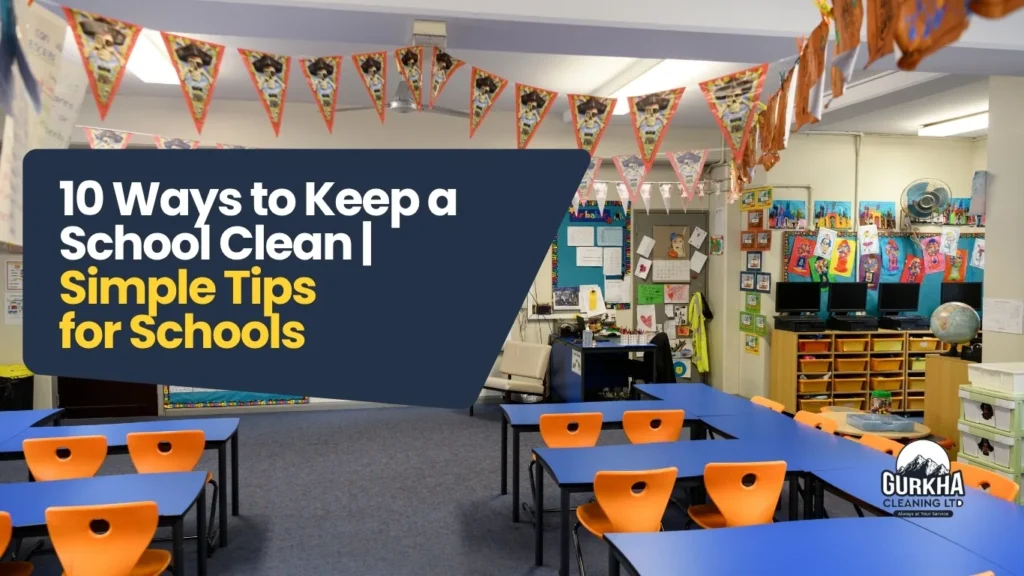
A clean school isn’t just about appearances. It’s about fewer sick days, better concentration, and a building that governors, parents, and Ofsted inspectors trust. Whether you’re a business manager in Winchester or a facilities lead across a multi-academy trust spanning Basingstoke and Andover, keeping cleanliness standards consistent across a busy school site takes more than a mop and a rota.
Here are 10 practical ways to keep a school clean, covering daily routines, pupil involvement, and the deeper hygiene work that keeps a building genuinely healthy.
Quick Answer
To keep a school clean, schools should follow a daily cleaning rota for classrooms, corridors, and toilets, disinfect high-touch surfaces regularly, involve pupils in tidying routines, and schedule deep cleans during half-term and holidays. Managing waste properly and bringing in professional cleaning support when needed also keeps standards consistent year-round.
Why Is It Important to Keep a School Clean?
A clean school reduces the spread of illness, supports concentration and wellbeing, and reflects well during Ofsted visits and parent tours. School cleanliness ideas UK schools rely on aren’t just about appearance. They’re tied directly to attendance, staff sickness levels, and how safe a building feels to the people working and learning in it every day.
For business managers and governors, cleanliness is also a budget issue. Fewer illness-related absences mean fewer disruptions to staffing and timetables, and a well-maintained building holds up better over time, reducing the cost of repairs and replacements down the line. In practice, keeping a school clean is less about polish and more about protecting the people, the routine, and the budget all at once.
Need cleaning that keeps pace with your school’s routine? Our education cleaning services are built around term dates, safeguarding requirements, and the standards schools across Hampshire are held to.
10 Practical Ways to Keep a School Clean
Keeping a school clean comes down to two things working together: consistent daily habits and the deeper cleaning that happens when pupils aren’t around. Get both right, and a school stays hygienic, presentable, and ready for anything from a routine Tuesday to an unannounced Ofsted visit.
Here are 10 practical ways to keep a school clean, from simple daily routines to the specialist support that fills the gaps.
1. Set a Clear Daily Cleaning Routine
Every school needs a structured cleaning rota that covers classrooms, corridors, toilets and washrooms, staff rooms, and reception areas every single day. Ad hoc cleaning leaves gaps, and gaps are where illness spreads.
The most effective schools split their day into three checkpoints: before the first bell, during the school day for high-traffic touchpoints, and a full clean after pupils leave. This is one of the simplest steps to keep a school clean, and it’s also the one most schools get wrong by relying on caretaker time alone.
2. Disinfect High-Touch Surfaces Regularly
Door handles, light switches, bannisters, and shared equipment carry more germs than almost anywhere else in a school. Disinfecting these surfaces several times a day is one of the most effective ways to maintain hygiene in school, particularly during winter term when flu and norovirus outbreaks tend to spike.
Colour-coded cloths and equipment matter here too. Kitchens, toilets, and classrooms should never share cleaning tools, since cross-contamination undoes the hygiene work in seconds.
3. Keep Classrooms Tidy Between Lessons
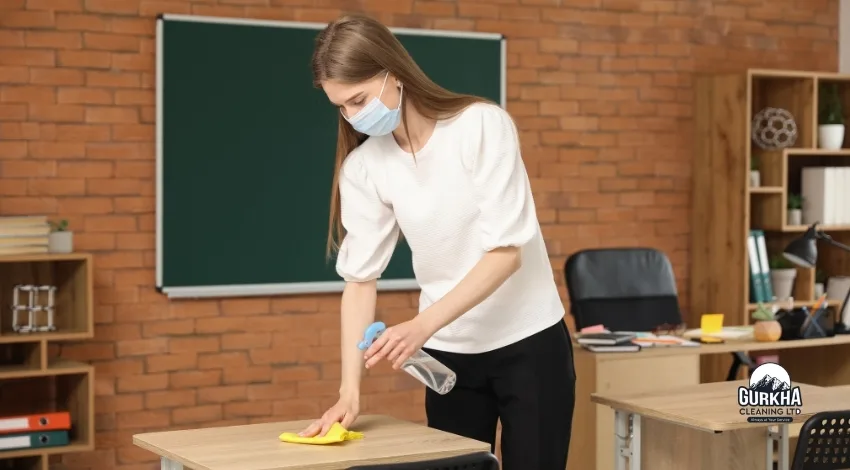
A classroom tidying routine doesn’t need to be complicated. Pupils clearing their own desks, stacking chairs, and binning rubbish at the end of each lesson keeps clutter from building up across the day.
This is one of the easiest ways to keep a classroom clean without adding to a caretaker’s workload, and it teaches pupils a habit that carries into secondary school and beyond.
Recommended Read: classroom cleaning checklist
4. Involve Pupils in Everyday Cleanliness
So how can pupils help keep the school clean? Small, consistent habits make the biggest difference: washing hands before lunch, using bins properly, wiping down shared tables, and reporting spills or mess to a member of staff.
Ways pupils can keep their school clean don’t need a formal programme. A simple “clean desk, tidy floor” expectation at the end of each session, reinforced by teachers, builds the habit naturally. The role of pupils in keeping a school clean is often underestimated, but it’s one of the most sustainable ways to maintain cleanliness in school long-term.
5. Prioritise School Toilets and Washrooms
Toilets are consistently the area parents, staff, and inspectors judge most harshly. Ways to keep school toilets clean include multiple daily checks, immediate restocking of soap and paper towels, and a clear reporting system so any issue gets fixed the same day, not the same week.
Odour control matters just as much as visible cleanliness. A washroom that looks tidy but smells poorly maintained still fails the test that matters to parents on an open day.
6. Deep Clean During Half-Term and Holidays
Term-time cleaning keeps a school running, but a half-term deep-clean school schedule reaches what daily routines can’t: carpets, upholstery, areas behind fixed furniture, air vents, and hard-to-reach corners in science labs and sports halls.
Holiday periods also give contractors the access needed for exam hall turnarounds, post-renovation cleans, or work in areas that can’t be disrupted during lesson time. Booking this in advance, rather than scrambling before the start of term, is one of the steps to keep a school clean that gets overlooked most often.
Recommended Read: how often should schools be cleaned
7. Manage Waste and Recycling Properly
Ways to reduce waste in school start with clearly labelled bins for general waste, recycling, and food waste, placed where pupils and staff will actually use them. Overflowing bins in corridors or canteens undo hygiene efforts fast and attract pests.
A cleanliness drive around waste doesn’t need to be a big initiative. Regular collection, correctly sized bins for each area, and clear signage go a long way toward keeping a school clean and green.
8. Maintain Kitchen and Canteen Hygiene Standards
Canteens carry the added weight of allergen and food hygiene standards, which means cleaning here can’t be treated the same as in a classroom or a corridor. Surfaces, equipment, and storage areas need cleaning to a standard that meets food safety inspection requirements, not just a visual check.
COSHH-compliant storage of any cleaning chemicals used near food preparation areas is essential, and staff working in these spaces should be trained specifically for kitchen environments.
9. Keep Outdoor and Shared Spaces in Check
Playgrounds, entrances, and outdoor play areas affect first impressions and daily hygiene just as much as indoor spaces. Litter picking, bin management, and regular checks on outdoor seating and equipment keep these areas from becoming a source of mess that tracks back indoors.
School premises’ cleanliness extends beyond the building itself, and it’s often the first thing visiting parents or inspectors notice on arrival.
10. Bring In Professional Support Where It's Needed
Caretaker teams do a huge amount, but most schools reach a point where daily caretaker duties and specialist deep cleaning need to sit separately. A school cleaning contractor UK schools can rely on brings trained, DBS-checked staff, COSHH-compliant products, and the flexibility to work around timetables without disrupting lessons.
This matters most when Ofsted cleanliness standards are under review or when a current setup simply isn’t keeping pace with a growing site. Working with a BICSC corporate member, CHAS-accredited, and ISO-certified contractor gives governors and procurement teams the assurance they need to sign off with confidence.
Recommended Read: DBS checks school cleaning contractor UK
Not sure which of these your school needs help with? Take a look at our full range of cleaning services to see how daily cleaning, deep cleans, and specialist support fit together for schools across Hampshire.
Why Choose Gurkha Cleaning Ltd for School Cleaning?
Schools need more than a cleaning company; they need a partner who understands how a school actually runs. Here’s what sets Gurkha Cleaning Ltd apart for schools, academies, and multi-academy trusts across Hampshire:
- BICSC Corporate Member, CHAS-accredited, and ISO-certified: recognised credentials that give governors and procurement teams the assurance they need to sign off with confidence
- DBS-checked and vetted staff: every team member is safeguarding-cleared before setting foot on site, with no exceptions
- COSHH-compliant products and storage: all cleaning chemicals are stored and used safely around pupils and staff, including in kitchens and food-preparation areas
- Flexible scheduling around term dates: work fits around lesson times, staggered access, and holiday periods, so classrooms, halls, and toilets are ready without disrupting teaching
- Experience across school types: primary schools, secondary schools, academies, MATs, nurseries, and independent schools, each with different layouts, routines, and compliance needs
- Local coverage across Hampshire: serving schools in Winchester, Southampton, Portsmouth, Basingstoke, Aldershot, Farnham, Andover, Salisbury, Petersfield, Newbury, and Alton
- Support for both daily cleaning and specialist deep cleans: from routine rota-based cleaning to half-term deep cleans, exam hall turnarounds, and Ofsted-ready standards
Final Thoughts
Keeping a school clean isn’t one task; it’s a combination of daily habits, pupil involvement, and properly scheduled deep cleaning that fits around term dates rather than working against them. Get the daily routine right, involve pupils where it makes sense, and book deep cleans in before they become urgent.
If your current setup isn’t quite covering everything, from toilets to term-time deep cleans, Gurkha Cleaning Ltd works with schools, academies, and MATs across Hampshire. Get in touch to talk through what your school needs.
Ready to talk through what your school needs? Get in touch with our team and we’ll help you find the right cleaning plan for your site.
FAQs
How often should a school be cleaned?
Classrooms, corridors, and toilets need cleaning daily, ideally at set checkpoints through the day rather than just once. Deeper areas like carpets, vents, and behind fixed furniture should be tackled during half-term or holiday deep cleans.
What is the difference between daily cleaning and a deep clean?
Daily cleaning covers surfaces, floors, and toilets to keep a school hygienic and presentable during term time. A deep clean goes further, reaching carpets, upholstery, air vents, and hard-to-access areas that daily routines can’t cover.
How can pupils help keep the school clean?
Daily cleaning covers surfaces, floors, and toilets to keep a school hygienic and presentable during term time. A deep clean goes further, reaching carpets, upholstery, air vents, and hard-to-access areas that daily routines can’t cover.
What should schools look for in a cleaning contractor?
Look for DBS-checked staff, COSHH-compliant products, and recognised accreditations such as BICSC, CHAS, or ISO certification. A contractor should also be able to work flexibly around term dates without disrupting lessons.
How do schools prepare for an Ofsted inspection?
Cleanliness standards should be consistent year-round, not rushed before an inspection. Toilets, classrooms, and shared spaces need to reflect the school’s everyday standard, since inspectors assess routine upkeep rather than a one-off clean.
Why are school toilets so important for hygiene?
Toilets are one of the first areas parents, staff, and inspectors judge, and poor upkeep spreads illness fastest. Multiple daily checks, quick restocking, and odour control keep them to an acceptable standard throughout the day.
Can schools reduce cleaning costs without lowering standards?
Yes, by separating routine caretaker duties from specialist deep cleaning, schools avoid overstretching staff while keeping standards consistent. Booking deep cleans in advance, rather than reactively, also helps control costs over the school year.