A classroom cleaning checklist in UK schools relies on having to cover more than a quick tidy-up between lessons. Desks get wiped, floors get a quick sweep, and the room looks fine by the time parents walk past at pickup. But looking clean and being hygienic are two different things, and the gap between them is exactly where illness spreads, absenteeism climbs, and staff end up covering for it.
This article sets out exactly what a professional school cleaner should be doing every day, how often different areas need attention, and what a proper school cleaning checklist in UK schools can be trusted to actually include.
Quick Answer:
The daily classroom cleaning checklist includes wiping desks and high-touch surfaces, disinfecting door handles and light switches, emptying bins, vacuuming or mopping floors, and sanitising shared equipment like keyboards and tablets.
Why Daily Classroom Cleaning Matters in the UK
Daily cleaning matters because classrooms are among the highest-contact environments in any building, and a single missed day lets germs build up fast on desks, door handles, and shared equipment. Pupils touch the same surfaces all day, every day, and skipping even one cleaning cycle gives illness a head start.
During flu season or a norovirus outbreak, this shows up quickly: one under-cleaned classroom can turn into a wave of absences across a year group within days. Staff wellbeing takes the same hit teachers working in a poorly cleaned room are exposed to the same risk as pupils.
Commercial hygiene standards follow the same logic in any shared workspace: the risk isn’t the mess you can see; it’s what builds up between cleans. In a classroom, that gap is measured in hours, not days, which is exactly why a classroom hygiene checklist has to run daily rather than weekly.
Looking for a cleaning team that specialises in schools? Our education cleaning services are built specifically around term-time schedules, safeguarding requirements, and the day-to-day realities of a school site.
What Does a Classroom Cleaning Checklist Include in the UK?
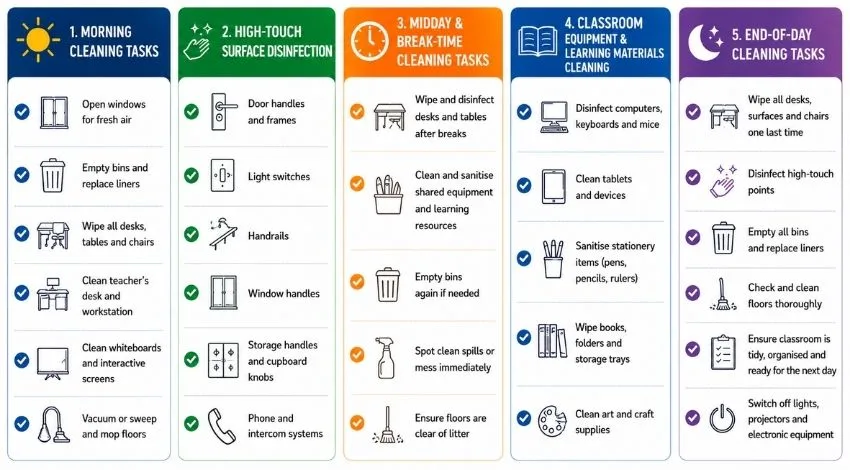
A daily classroom cleaning checklist includes desk and surface wiping, disinfection of high-touch points like door handles and light switches, floor cleaning, bin emptying, and sanitising of shared equipment such as keyboards, tablets, and stationery. Done properly, it covers the classroom from first bell to last:
- Morning cleaning tasks
- High-touch surface disinfection
- Midday and break-time cleaning tasks
- Classroom equipment and learning materials cleaning
- End-of-day cleaning tasks
1. Morning Cleaning Tasks
The first job before pupils arrive is resetting the room from the day before. This means desks, floors, and bins are all dealt with before the first bell rings.
- Desks and chairs wiped down before pupils arrive
- Floors checked and spot-cleaned for spills or marks left overnight
- Bins emptied and lined ready for the day
2. High-Touch Surface Disinfection
These points get touched by every pupil and staff member who passes through, often dozens of times an hour. That’s why they’re treated separately from general surface cleaning.
- Door handles and light switches disinfected multiple times a day, not just once
- Shared equipment surfaces treated as high priority, not an afterthought
- Focus here specifically because this is where most classroom illness spreads
3. Midday and Break-Time Cleaning Tasks
Lunch and break create a second wave of mess that morning cleaning can’t account for. A midday pass keeps the room usable for the rest of the day.
- Quick wipe-down of desks and surfaces after lunch or break
- Spot-cleaning any spills, crumbs, or mess from snack time
- Bin check and hand sanitiser restock where levels are low
4. Classroom Equipment and Learning Materials Cleaning
Shared items pass through more hands than almost anything else in the room, which makes them easy to overlook and important to stay on top of.
- Shared stationery and art supplies wiped down daily, not left until visibly dirty
- Tablets and keyboards cleaned as standard, especially where devices are shared between pupils
- IT equipment checked as part of the routine, not treated as a special task
5. End-of-Day Cleaning Tasks
The last pass of the day resets the classroom fully, so it’s ready for the next morning without anything carried over.
- Full surface wipe-down across desks, shelving, and windowsills
- Waste removed and bins emptied for the following morning
- Floors cleaned or vacuumed ready for next-day use
Recommendation Read: What are school cleaning services and what do they include?
What Should a School Cleaner Do Every Day?
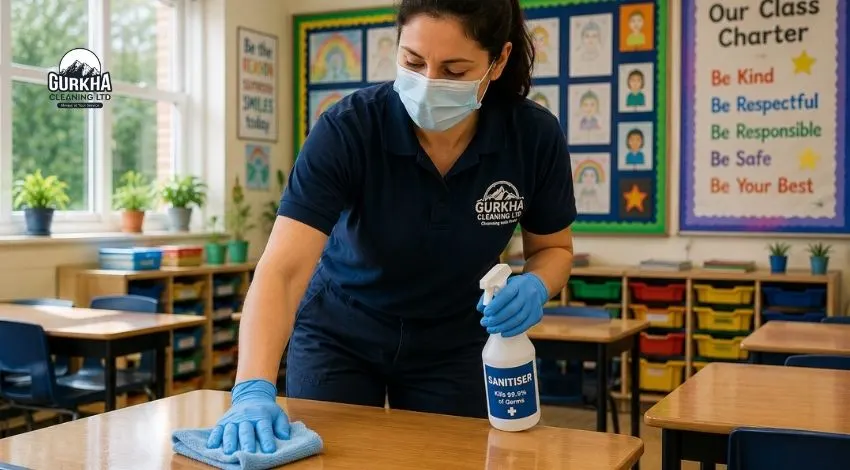
A school cleaner should cover far more than the classroom alone, moving through the site from morning setup to end-of-day close-down: disinfecting toilets and washrooms, cleaning corridors and halls, restocking hygiene supplies, and keeping high-touch points across the building under control throughout the day, not just once.
Daily duties across the site typically include:
- Cleaning and disinfecting toilets and washrooms, including sinks, taps, and cubicles
- Sweeping, mopping, or vacuuming corridors, halls, and communal walkways
- Restocking hand sanitiser, soap, and paper towels across all washrooms and shared areas
- Wiping down high-touch points throughout the building: door handles, light switches, banisters, lift buttons
- Emptying and relining bins across classrooms, offices, and communal areas
- Spot-checking staff rooms, reception, and admin areas for tidiness and hygiene
Recommendation Read: DBS checks for school cleaners
Classroom Cleaning Schedule in UK: Daily vs Weekly vs Termly
| Task | Daily | Weekly | Termly |
|---|---|---|---|
| Desk and surface wiping | Yes | – | – |
| High-touch surface disinfection | Yes | – | – |
| Bin emptying | Yes | – | – |
| Floor sweeping/mopping | Yes | – | – |
| Carpet vacuuming (deep) | – | Yes | – |
| Window and glass cleaning | – | Yes | – |
| Upholstery cleaning | – | – | Yes |
| Deep carpet/floor treatment | – | – | Yes |
| Behind-furniture and hard-to-reach cleaning | – | – | Yes |
Looking for school cleaning near Winchester? Our cleaners in Winchester already help local schools stay on top of this with reliable, term-time-friendly schedules.
Common Mistakes Schools Make With Classroom Cleaning in UK
Even schools with a cleaning contractor in place can fall into a few common traps:
- Treating “clean” and “hygienic” as the same thing. A tidy classroom with wiped-down surfaces can still carry germs on light switches, door handles, and shared equipment if disinfection isn’t part of the daily routine.
- Under-cleaning high-touch points. Desks get wiped, but door handles, bannisters, and shared IT equipment are often missed, despite being some of the most contaminated surfaces in the building.
- No clear schedule for deep cleans. Without a set weekly and termly plan, carpets, upholstery, and hard-to-reach areas can go months without proper attention.
- Inconsistent standards across a site. Different classrooms or year groups sometimes get different levels of attention depending on which cleaner covers that area, rather than following a single agreed checklist.
- Scheduling cleans around lessons instead of around the school day. Cleaning that clashes with timetabled lessons, exams, or after-school clubs gets rushed or skipped. The better approach is working around staggered access, holidays, and quiet periods so classrooms are ready without disrupting teaching.
These same gaps show up across commercial cleaning more widely; we’ve covered the most frequent ones in our guide to the 5 common commercial cleaning mistakes, along with how to avoid them.
Recommendation Read: School cleaning standards in the UK
Hiring Gurkha Cleaning Ltd : A Professional School Cleaning Company in Hampshire
Choosing the right team for your school’s cleaning needs matters. Poor hygiene standards affect pupil health and staff wellbeing, and the wrong contractor can leave you exposed at the worst possible moment, such as an Ofsted visit, a parents’ evening, or the start of a new term.
When hiring a school cleaner, look for fully insured, background-checked staff, recognised industry credentials such as BICSC or CHAS membership, and eco-friendly, child-safe cleaning products.
Gurkha Cleaning Ltd is a locally run Hampshire cleaning company offering professional commercial cleaning services tailored to schools and educational settings. We’re a BICSC corporate member, CHAS accredited, and ISO certified, with every cleaner fully insured and background-checked before they set foot on site. Our team delivers reliable, flexible cleaning schedules with transparent pricing and no hidden costs, working around your timetable rather than the other way round.
Not sure if we cover your school’s area? Check the full list of areas we cover in Hampshire.
Final Thoughts
A consistent classroom cleaning checklist in UK schools can rely on more than just appearances; it directly affects pupil health, staff wellbeing, and overall learning outcomes. From daily desk wipe-downs to termly deep cleans, following a clear routine keeps classrooms genuinely hygienic, not just visibly tidy.
If your school needs a cleaning partner that treats these standards as routine rather than an afterthought, that’s exactly what a proper day-to-day approach should feel like.
Ready to see what a proper classroom cleaning routine could look like at your school? Contact us today for a free, no-obligation quote.
FAQs for Classroom Cleaning Checklist
How much does school cleaning cost in the UK?
School cleaning costs vary based on classroom size, cleaning frequency, and service level, but typically range similarly to commercial cleaning rates of £12–£30 per hour.
Do schools need a professional cleaning company, or can staff clean classrooms themselves?
While teachers can manage light daily tidying, professional cleaners like Gurkha Cleaning Ltd are recommended for thorough disinfection, specialist equipment cleaning, and compliance with health and hygiene standards, especially in high-footfall areas.
What is the difference between daily cleaning and deep cleaning in schools?
Daily cleaning covers routine tasks like wiping surfaces and emptying bins, while deep cleaning involves intensive tasks such as carpet cleaning, upholstery cleaning, and sanitising hard-to-reach areas, usually done during school holidays.
Why is classroom hygiene important for pupil health?
Classrooms are high-contact environments where germs spread quickly between pupils and staff. Regular cleaning and disinfection reduce the spread of illness, lower absenteeism, and create a healthier learning environment.
Are school cleaning products safe for children?
Reputable school cleaning contractors use COSHH-compliant products stored securely away from pupils, with eco-friendly and child-safe formulations used wherever possible to reduce exposure to harsh chemicals.
Can school cleaning be scheduled outside teaching hours?
Yes, most professional school cleaners work early mornings, evenings, or during holidays and staggered access periods so classrooms are cleaned without disrupting lessons or requiring pupils to be present.